The Symbol
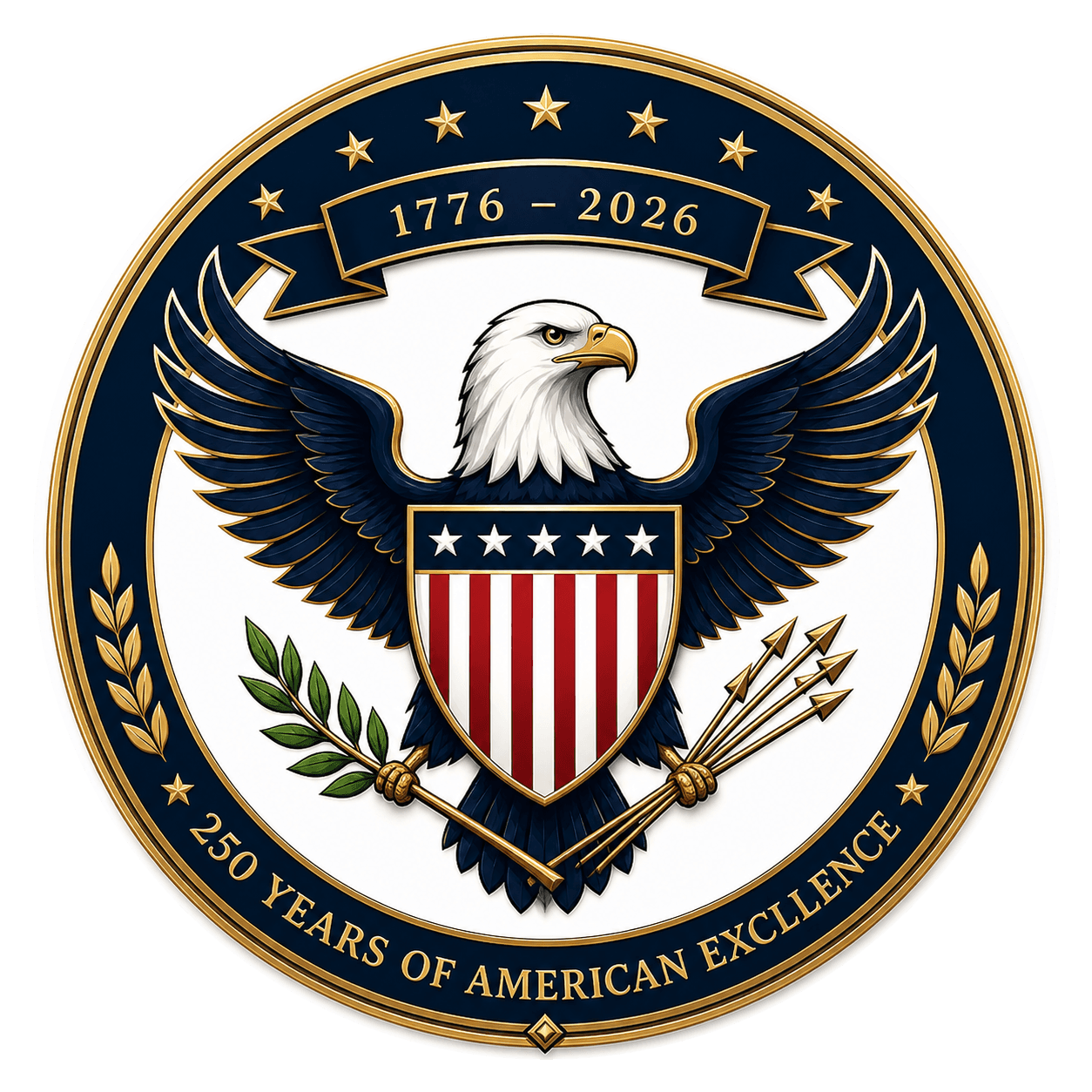
The Great Seal of the United States.
Six years. Three committees. One eagle holding 13 arrows in one talon and an olive branch in the other. The history of the symbol that became America, and the meaning behind every count of 13.
Updated May 3 2026 · Sources: U.S. State Department, National Archives, Library of Congress.
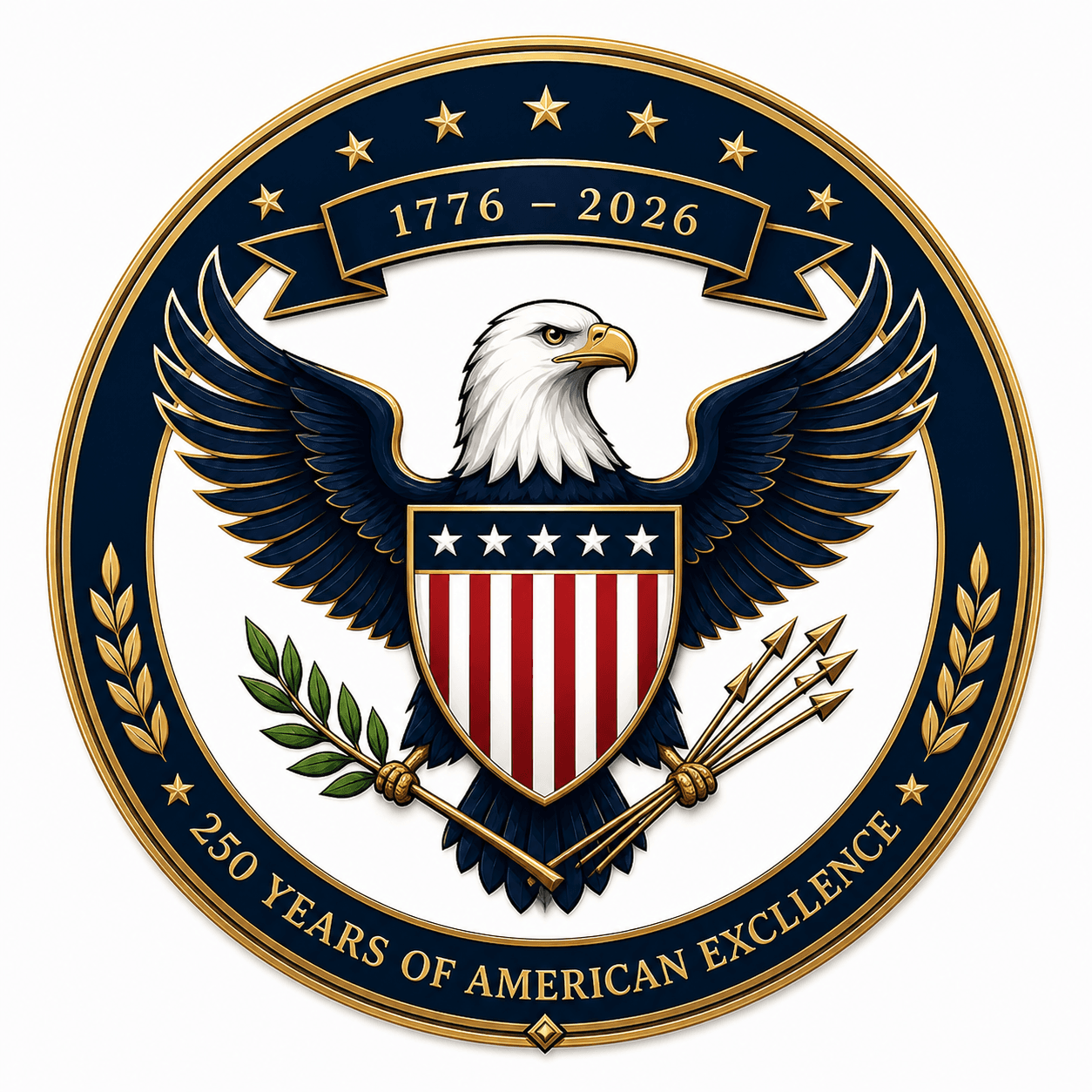
Commissioned the same day as the Declaration
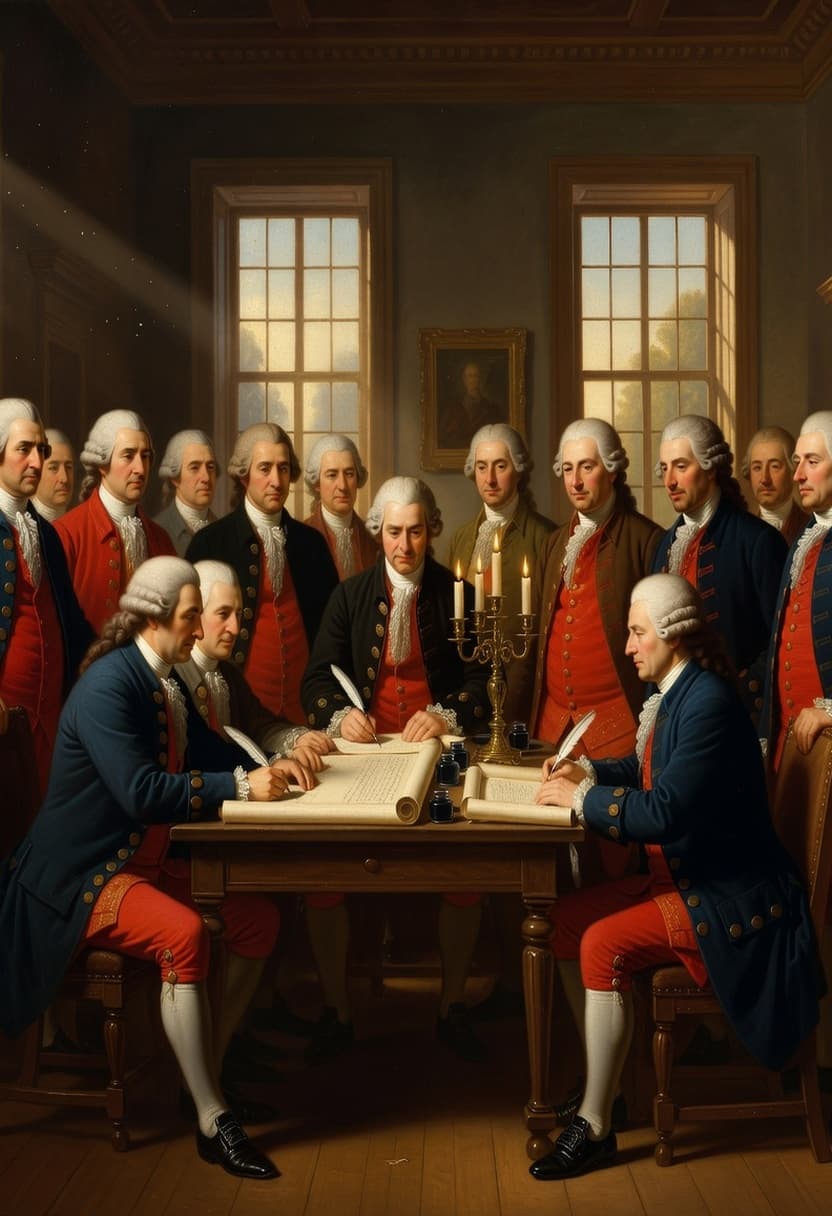
On July 4 1776, the same Continental Congress that approved the Declaration of Independence appointed a committee to design a seal for the new nation. Benjamin Franklin, John Adams, and Thomas Jefferson were the first three members. They had no template. No nation had been built this way before, and the symbol of that nation had to be invented from a blank sheet.
Six years, three committees
The first committee proposed Moses parting the Red Sea, with the motto Rebellion to Tyrants is Obedience to God. Congress passed. A second committee in 1780 added a warrior with a sword, an eagle on a shield, and a constellation of 13 stars. Congress passed again. The third committee, in May 1782, finally produced the form America still uses, drawing on sketches from all three rounds.
Charles Thomson and William Barton finished it
Charles Thomson, the long-serving Secretary of Congress, took the third committee's draft and rewrote it. He kept the bald eagle from William Barton's sketch, replaced the small white eagle with an American bald eagle, gave it 13 arrows in one talon and an olive branch in the other, and added the motto E pluribus unum on a scroll in its beak. Congress adopted the design on June 20 1782, six years and one week after independence was declared.
Why the bald eagle
The bald eagle was chosen for its longevity, strength, and majestic look, and because it lives only in North America. It already appeared on Massachusetts state seals and on coins. Benjamin Franklin's famous letter calling the eagle a bird of bad moral character was written privately to his daughter in 1784, two years after the seal was already adopted. He never lobbied for the turkey on the seal itself. Congress formally designated the bald eagle the national bird in December 2024.
Everything is in 13s
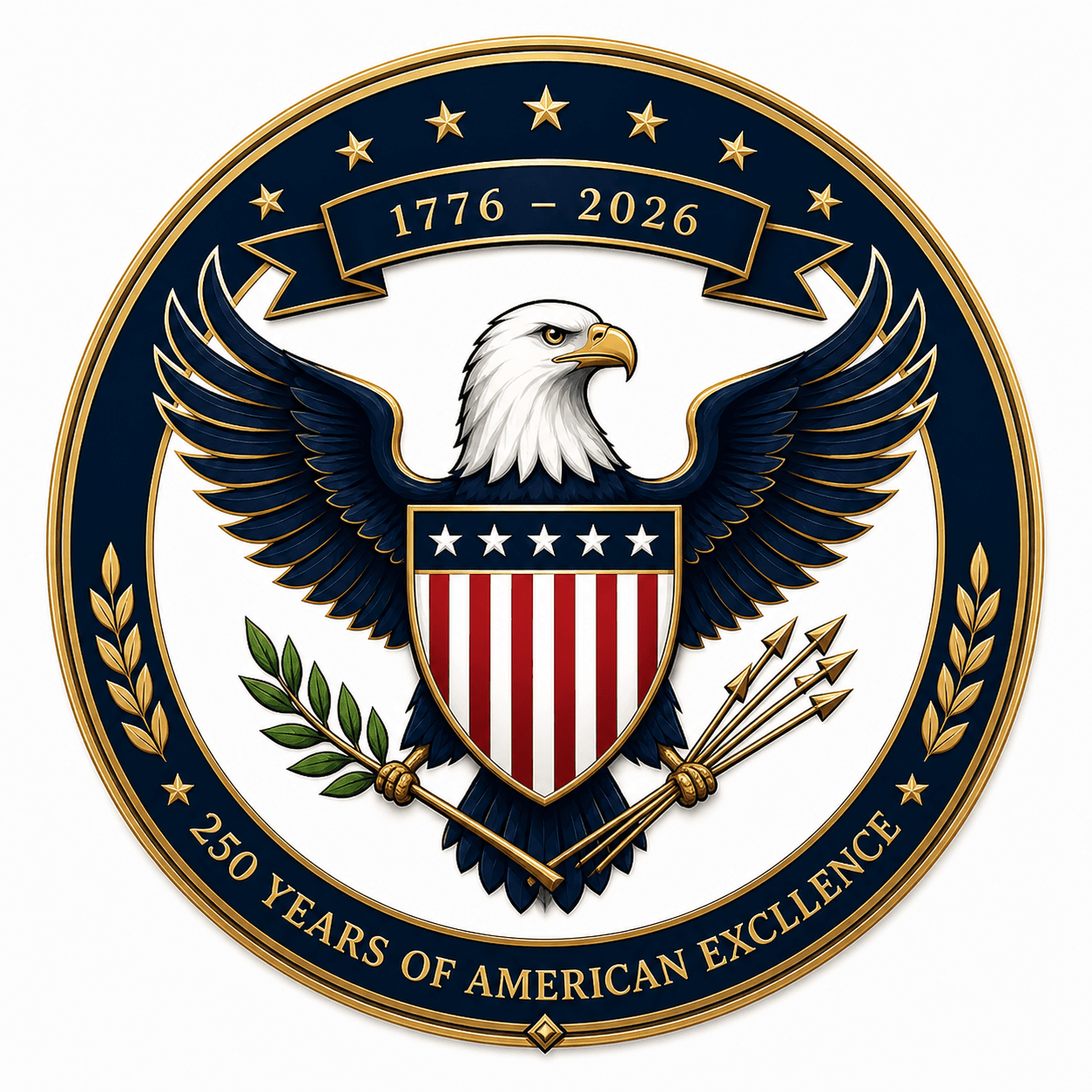
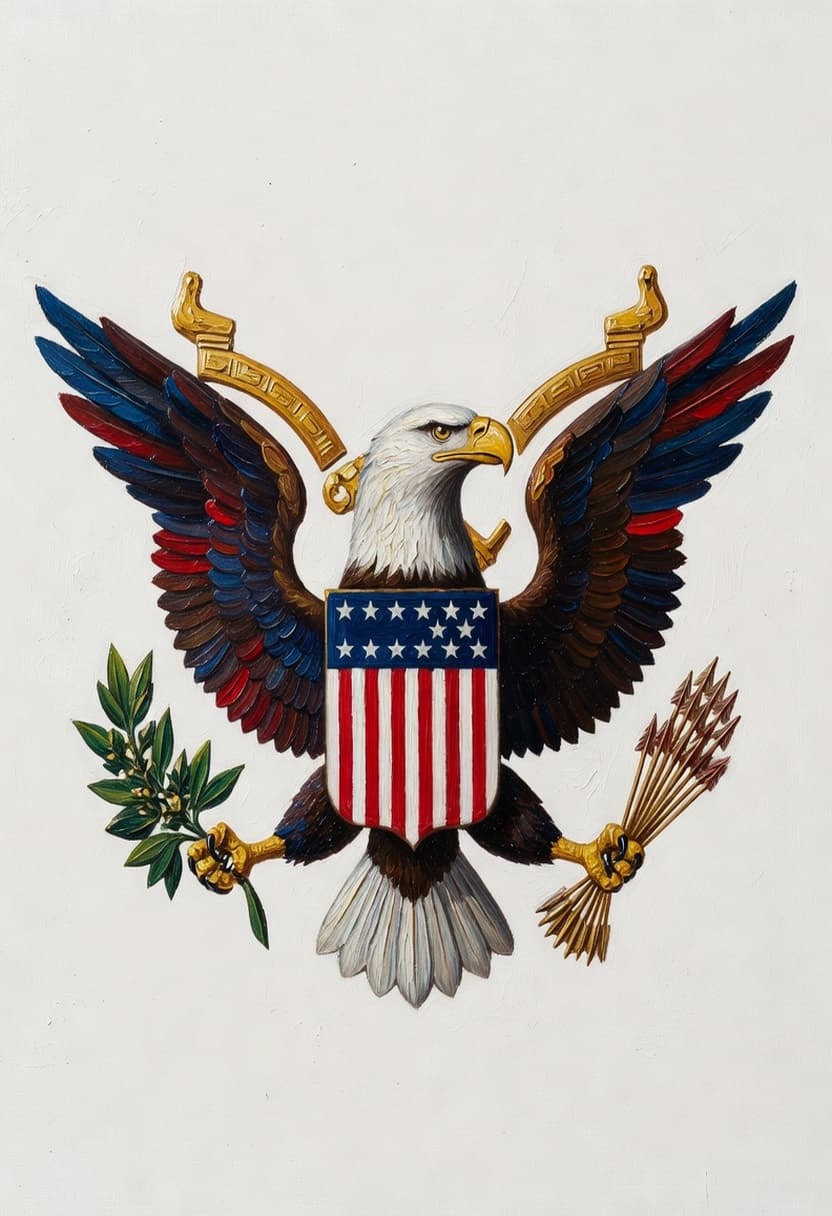
Every element of the obverse counts to 13, the number of original colonies. Thirteen stars in the constellation above the eagle. Thirteen stripes on the shield. Thirteen arrows in the left talon. Thirteen olive leaves and thirteen olives on the branch in the right talon. The motto E pluribus unum, out of many, one, is exactly thirteen letters. The eagle's head turns toward the olive branch, signaling that America prefers peace but stays armed.
The reverse and the dollar bill
The Great Seal has a reverse side that has never been engraved as a physical seal but appears on the back of the one dollar bill. It shows an unfinished pyramid of 13 courses, capped by the Eye of Providence in a triangle. Above is the motto Annuit Coeptis, He has favored our undertakings. Below is Novus Ordo Seclorum, A new order of the ages. Both phrases are adapted from the Roman poet Virgil. The unfinished pyramid signals that the work of the country is not done.
From 1782 to today
The first die was cut in 1782 and used until 1841. A second die replaced it, then a third in 1877, and the current master die was cut in 1904 with subtle changes to the eagle's posture and the constellation. The seal still authenticates federal documents, treaties, and presidential proclamations. The eagle on military insignia, the President's flag, passports, and coinage all trace back to that 1782 design.
Timeline
The seal in six moments
- 1776Continental Congress appoints first committee on July 4.
- 1780Second committee proposes warrior, eagle, and 13 stars.
- 1782Third committee + Thomson + Barton finalize design; adopted June 20.
- 1841First die retired; second die cut.
- 1904Current master die cut by Tiffany & Co.
- 2024Bald eagle formally designated the national bird.
Common questions
About the Great Seal
When was the Great Seal of the United States adopted?+
Congress adopted the Great Seal on June 20 1782, six years after the Declaration of Independence. The design was the work of three successive committees and was finished by Charles Thomson, Secretary of Congress, with William Barton.
What does the bald eagle on the Great Seal hold?+
The bald eagle holds 13 arrows in its left talon and an olive branch with 13 leaves and 13 olives in its right talon. The arrows represent readiness for defense; the olive branch represents the desire for peace. The eagle's head turns toward the olive branch.
Why are there so many 13s on the Great Seal?+
Thirteen represents the original 13 colonies. The shield has 13 stripes; the constellation has 13 stars; the talons hold 13 arrows and 13 olive leaves; and the motto E pluribus unum is exactly 13 letters. The reverse side carries a pyramid of 13 courses.
Did Benjamin Franklin want a turkey instead of an eagle?+
No. Franklin's 1784 letter calling the eagle a bird of bad moral character was a private letter to his daughter, written two years after the seal was already adopted. He never proposed a turkey for the Great Seal in any official capacity.
What is the pyramid on the back of the dollar bill?+
It is the reverse of the Great Seal. The unfinished 13-course pyramid is capped by the Eye of Providence and the Latin mottos Annuit Coeptis (He has favored our undertakings) and Novus Ordo Seclorum (A new order of the ages). The unfinished pyramid signals that the work of the country is ongoing.
Is the bald eagle the official national bird?+
Yes. Although the bald eagle has been on the Great Seal since 1782, it was not formally designated the national bird until December 2024, when President Biden signed the recognition into law.
Where can I see the original Great Seal die?+
The original 1782 die has been retired, but the current master die is held at the U.S. Department of State and used to seal treaties and presidential commissions. Replicas of the obverse and reverse appear on the dollar bill and on countless federal seals.